Experience the ultimate Vineyard Stays in India: Where to Sleep on a Working Winery at Hotel Irada.
The phrase “vineyard stay” has become loose. It now covers a wide range of things — a hotel with a decorative row of vines by the driveway, a resort a twenty-minute drive from a winery, and, occasionally, an actual property built on land that produces wine commercially.
Those are not the same holiday, and the difference only becomes obvious after you have arrived.
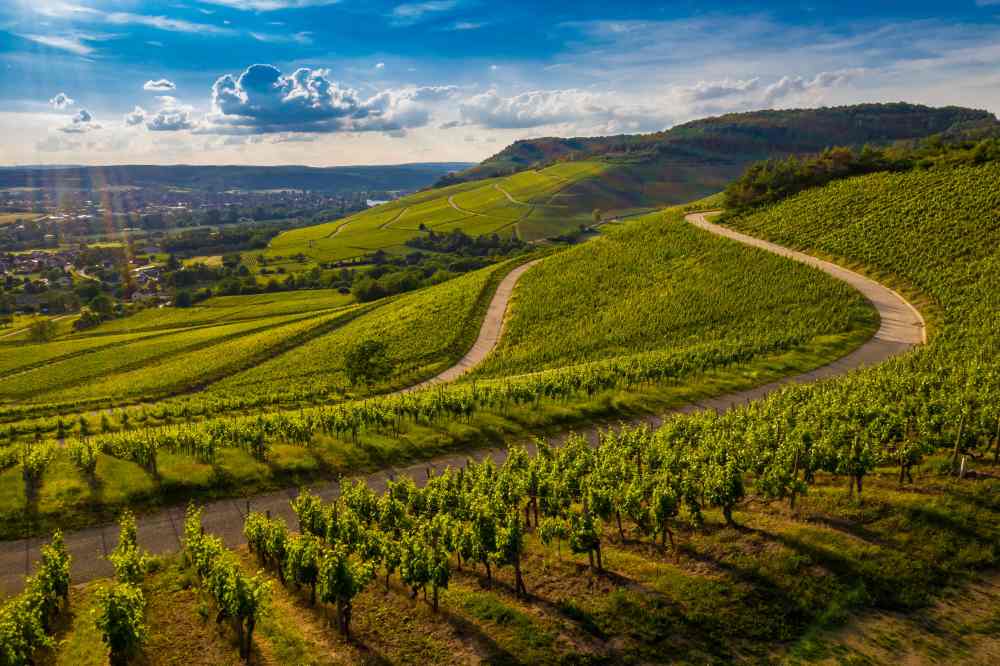
A genuine vineyard stay in India means sleeping on a working agricultural estate. There is a growing season happening around you. The vines are pruned and picked on a schedule that has nothing to do with the hotel’s occupancy calendar. The landscape looks different in January than it does in July, because it is doing something rather than being maintained.
This guide covers what actually separates a working winery from a hotel with a view of one, where India’s wine regions are, and what to check before you book.
What “Working Winery” Actually Means
A working winery grows fruit and makes wine on the property, at commercial scale, across a full seasonal cycle. Practically, that means a few things you can verify before booking.
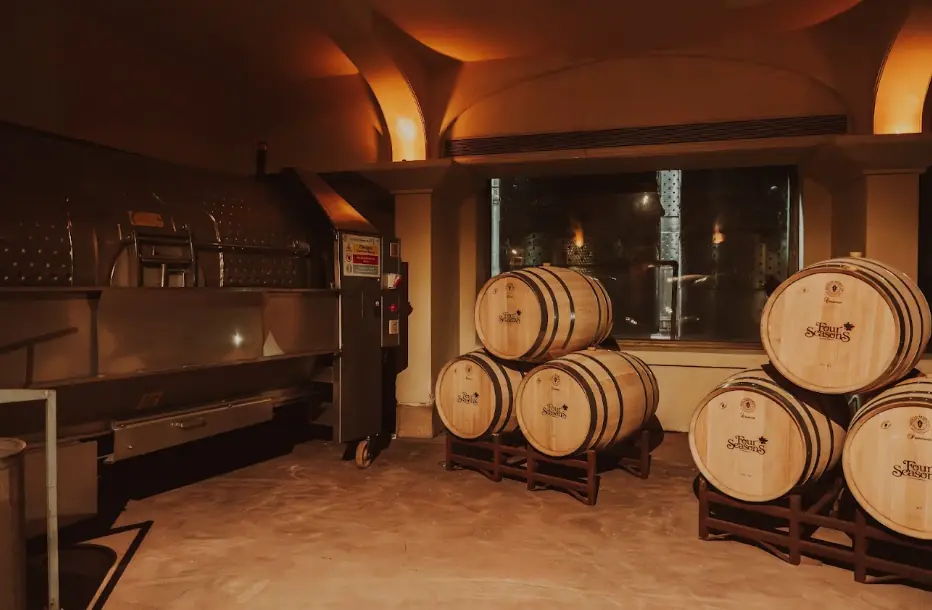
There is production infrastructure on site. Fermentation tanks, a press, a barrel room. Not a display cellar — the equipment the estate genuinely uses.
The estate makes its own label. There is a wine list produced from those vines, not just a curated selection of other people’s bottles.
Someone technical runs it. A winemaker, a viticulturist, or an estate manager whose job is the vineyard rather than the hotel.
The calendar moves. Pruning, veraison, harvest, crush. If the property looks identical in every month of its photography, the vines are landscaping.
This matters for the guest for one simple reason: a working estate gives you something to see and do that a landscaped one cannot manufacture. Walking vine rows during harvest, tasting wine straight from a fermentation tank, standing in a cool barrel room in the middle of a hot afternoon — none of these exist at a property where the vines are decorative.
Where India’s Wine Regions Are
India’s wine production concentrates in a handful of areas, and knowing which is which narrows the search quickly.
Nashik, Maharashtra. The country’s best-known wine region and the default answer for most people searching for a wine resort in India. It has the longest-established brands, the most developed visitor infrastructure, and the highest weekend footfall. If you want the busiest, most familiar version of Indian wine tourism, this is it.
The Akluj and Solapur belt, Maharashtra. Further south and considerably quieter, with established estates producing at scale. Less visited, and further from both Mumbai and Pune.
Nandi Hills and the Bengaluru belt, Karnataka. South India’s centre of wine production, at higher elevation, serving the Bengaluru drive market.
Pune wine country. The newest of these as a visitor destination — the vineyard country south-east of Pune city, out towards the Bhima valley and Baramati. Rural, sparsely developed for tourism, and the reason this region is on the map at all is a small number of estates producing here. It is the least crowded of the four.
Most travellers default to Nashik because it is the name they know. It is a genuinely good answer, and it has more wineries to visit in a single trip than anywhere else in the country. The trade-off is that on a Saturday you will be sharing it.
What a Working Winery Adds to the Stay
This is the part worth being concrete about, because it is where the two kinds of property separate.
At Hotel Irada — a 66-acre working winery in Pune wine country, cradled by 4,000 acres of reserve forest — the Estate Wine Tour is led by Australian Estate Manager Craig Wedge and starts from ₹2,000.
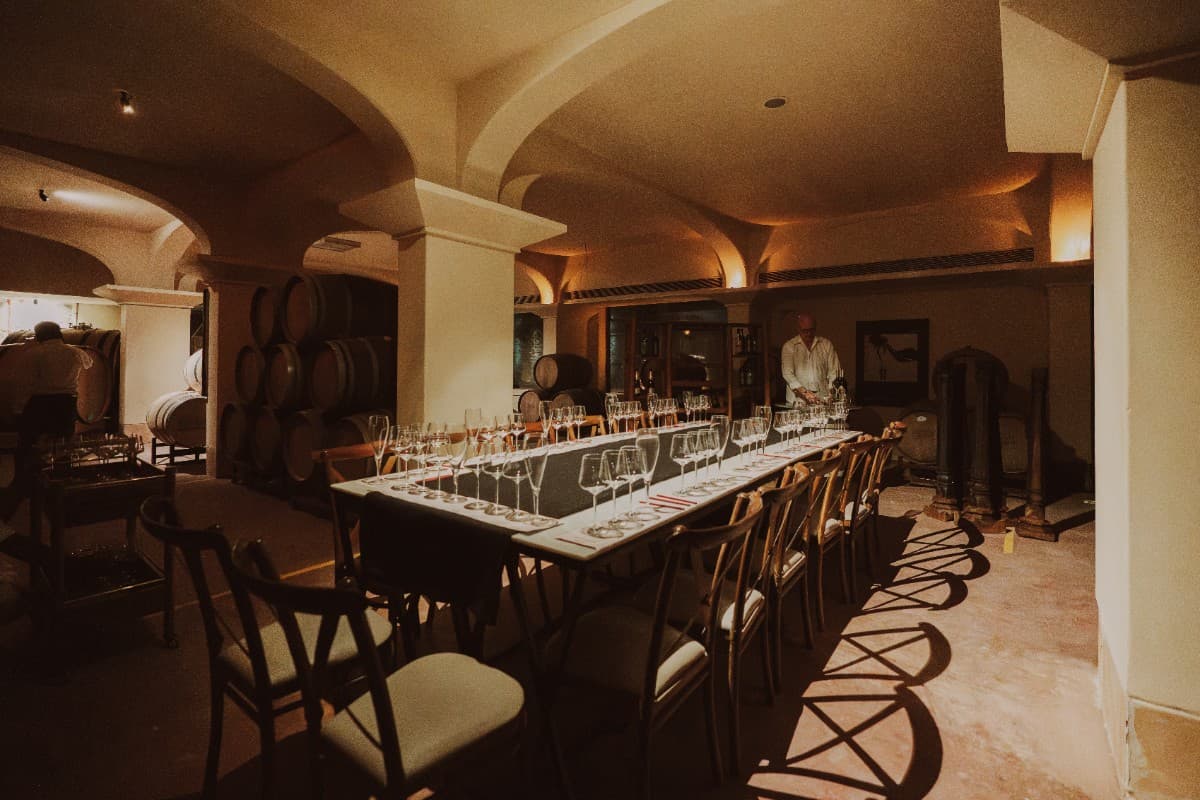
The route is a good illustration of what production infrastructure gives a guest. It begins at the helipad in the middle of the vines with an introduction to viticulture, moves through a guided walk of the working vineyard, then heads inside the manor to the tank rooms — where wine is tasted directly from the fermenting tanks. The extended tour continues into the barrel rooms, past the pressing machines and Bordeaux-imported oak casks, and ends in the Tasting Room.
Along the way the specifics are agricultural rather than decorative: how the monsoon shapes the soil, how the basalt rock beneath the estate affects the grape, how time behaves differently inside a barrel. The estate produces a small-batch collection of its own, poured alongside bottles from elsewhere — new-world and old-world both.
None of that is available at a hotel that happens to have vines. You can book a tour without staying, which is also a reasonable way to test a region before committing to a longer trip.
What to Check Before You Book
A short checklist that separates the real thing from the marketing:
- Does the property have its own wine list? If the estate makes wine, it will say so by name. A page listing other producers’ bottles is a bar, not a winery.
- Is there a tour that goes inside production? Tank rooms, press, barrel cellar. A walk through vine rows alone can be arranged anywhere there are vine rows.
- Who leads it? A named winemaker or estate manager signals an actual operation. “Our team” usually signals a script.
- What happens at harvest? A working estate will be specific about its season. In most of Maharashtra that falls roughly January to March.
- How far is it really? Wine regions are rural by definition. Confirm the actual distance and route rather than trusting the city in the property’s name.
- What else is on the estate? Wine is one afternoon. On a two- or three-night stay, dining, wellness and grounds matter more than the tasting does.
Where to Sleep: The Estate Itself
If you are choosing a stay at a winery in India rather than just a tour of one, the accommodation has to hold up independently of the vines.
At Irada the rooms and suites run across four categories. Reserve Rooms (340–425 sq. ft.) open onto private balconies over the inner courtyard or the misted vineyards, with a king bed, a midcentury bar and a DeLonghi espresso machine. Gallery Rooms (480 sq. ft.) add Burgundy bathtubs and a collage of art collected from Les Puces in Paris. Vineyard Suites (700–750 sq. ft.) bring arched ceilings, 60s French panelling and generous sit-outs facing the vines. The Collector’s Suite (1,250 sq. ft.) crowns the estate with a 300 sq. ft. terrace over the vineyard, a private bar and a Verde Guatemala marble bath, and connects with two Reserve Rooms to form a three-bedroom hideaway.
Around them: Rosso for Italian cooking with a western Indian accent, the Irada Pool Club for all-day dining beside a checkered pool, Lola for evening drinks, and a Subko collaboration for coffee. Nyāsa Wellbeing handles spa therapies, yoga, an Agave View Sauna and a hot plunge. Forest trails run into the reserve, with Indian chinkara across the grasslands, alongside padel, pickleball, minigolf and croquet.
The estate carries a Michelin Guide 2026 listing, a place on Condé Nast’s Best New Hotels in India: 2026 Hot List, and Travel + Leisure Asia’s India’s No.1 Wine Hotel.
When to Go
Vineyard stays are one of the few holidays where the month genuinely changes the experience.
January to March is harvest and crush across most of Maharashtra. The vines are heavy, the production rooms are busy, and the estate is at its most active. It is also the most comfortable weather for spending time outdoors.
June to September brings the monsoon. The vines are at their greenest, the forest is loud with water, and rates are typically at their softest. It is the quietest and least photographed version of wine country, which some travellers prefer.
October to December sits between the two — settled weather, fewer crowds than the harvest window, and the run-up to the festive season.
Frequently Asked Questions
What is a vineyard stay? A vineyard stay is accommodation located on a property that grows grapes and produces wine, as opposed to a hotel situated near a wine region. The distinction matters because a working estate offers vineyard walks, production tours and tastings on site.
Where can you stay on a working winery in India? India’s wine production concentrates in Nashik and the Akluj–Solapur belt in Maharashtra, the Nandi Hills belt in Karnataka, and Pune wine country south-east of Pune city. Hotel Irada is a 66-acre working winery in the last of these.
What is the difference between a wine resort and a working winery? A wine resort may sit within a wine region without producing wine itself. A working winery grows fruit and makes wine commercially on the property, with fermentation tanks, a press and a barrel room on site.
When is grape harvest season in India? Harvest across most of Maharashtra falls roughly between January and March, which is also when estates are at their most active and the weather is most comfortable for time outdoors.
Can you visit a winery without staying overnight? Yes. Hotel Irada’s Estate Wine Tour can be booked separately from ₹2,000, covering the vineyard walk, tank rooms and Tasting Room.
How long should a vineyard stay be? Two nights is usually the minimum that works — one day for the tour and tasting, and a second that is not spent travelling.
Final Thoughts
The best vineyard stays in India are not the ones with the most vines in the photographs. They are the ones where the vines are doing something — where there is a harvest to be in the middle of, a tank room to walk into, and a person on the property whose job is the fruit rather than the front desk.
Nashik will give you the most wineries in one trip. Pune wine country will give you the quietest version of the same idea.
Hotel Irada sits in the second — 66 acres of working vineyard inside 4,000 acres of reserve forest, with the production, the estate label and the tour to go with it.
See the rooms and suites or book direct for the best available rate, an Aperol Spritz at Rosso, the Irada tote, and a half-hour Racquet Club slot. Marriott Bonvoy members earn points on directly booked stays.